You hired someone from Latin America.
They’re talented. Their English is solid. The rate made sense.
But three months in, something feels off.
They’re not speaking up in meetings. They seem distant. Maybe they’re already looking elsewhere.
Your LATAM hire isn’t just a cheaper version of a US employee who happens to live further south.
They come with different expectations. Different communication styles. Different definitions of what “good management” even means.
And if you don’t understand these differences, you’ll lose great people without ever knowing why.
Are You Looking to Hire in the Latin America and Unsure Where to Start?
Sign up for an account and recruit your next employee within minutes!
Get StartedThe Relationship Comes Before the Work
In the US, UK, or Australia, you can jump straight into business: “Here’s the project, here’s the deadline, let’s go.”
That doesn’t work in Latin America.
Your hire expects you to build a relationship first. Not in a fake corporate “team-building exercise” way. In a real way.
Start your meetings with actual conversation. Ask about their family. Their weekend. Their city.
This isn’t small talk to them. It’s how trust gets built.
Without that foundation, you’re just another foreign company extracting value.
I’ve seen managers skip this step because they think it’s inefficient.
Then they wonder why their team never speaks up or takes initiative.
The relationship isn’t separate from the work. It is the work.
Your Feedback Style Is Probably Too Harsh
You think you’re being clear and direct.
They think you’re being disrespectful.
Here’s the thing about feedback in LATAM cultures: context matters more than directness.
If you say “This isn’t good enough, redo it,” that lands differently than it would with someone in San Francisco. It doesn’t feel constructive. It feels dismissive.
The work still needs to get done right. Standards don’t change.
They Need Structure More Than You Think
LATAM professionals are incredibly capable.
But many managers make the mistake of assuming they want complete autonomy from day one.
They don’t.
Your hire expects real onboarding. A clear plan. Regular check-ins, especially in the first 90 days.
When you throw someone into the deep end with minimal guidance, it doesn’t feel like trust. It feels like neglect.
Here’s what good onboarding looks like:
- First day: Full access to all tools. A mentor or buddy assigned. A welcome message from leadership.
- First week: Clear 30-60-90 day goals. Daily quick syncs.
- First month: Weekly one-on-ones. Specific feedback on what’s working and what needs adjustment.
Once trust is established and they understand your expectations, then you can step back.
But you have to earn that autonomy together.
The Money Conversation Is More Complex Than You Think
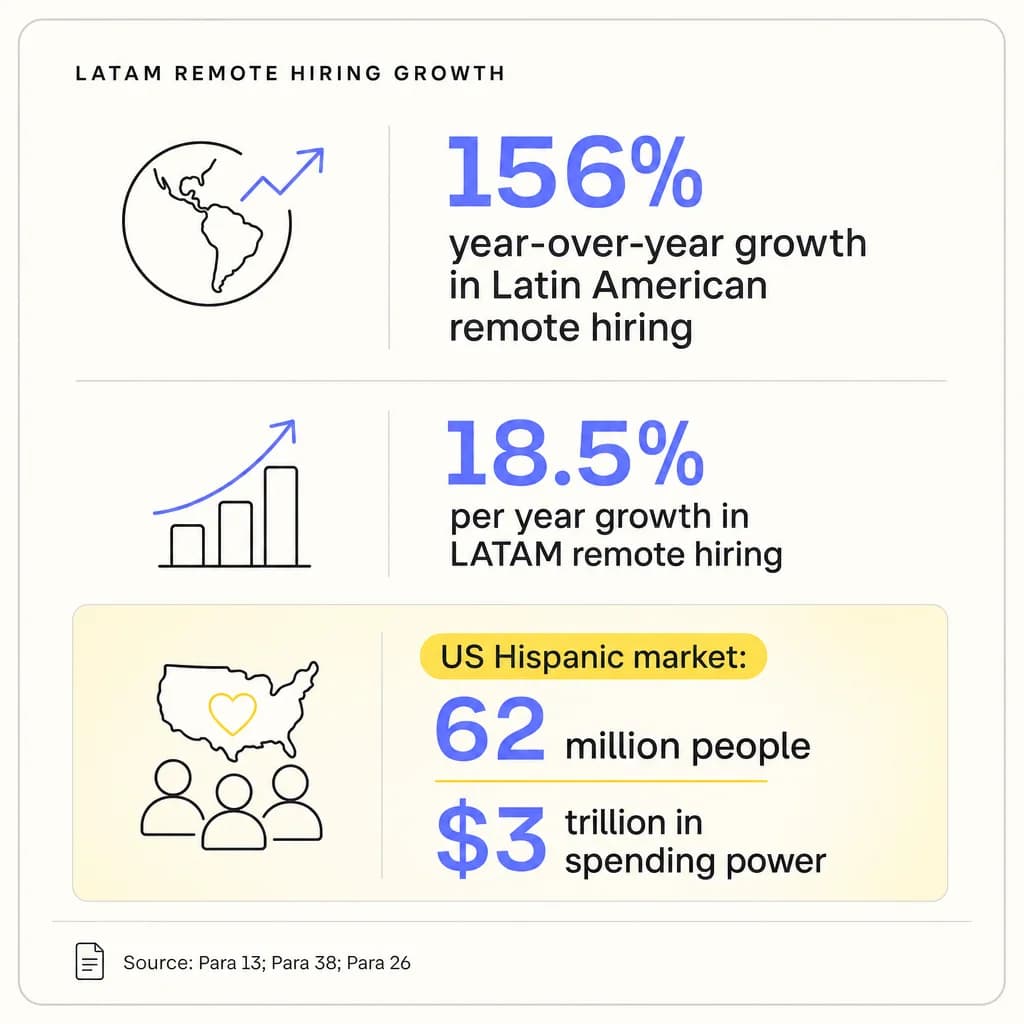
Many LATAM countries deal with currency volatility, inflation, and economic uncertainty.
A job that pays in US dollars isn’t just a job—it’s financial security for their entire family.
That’s why underpaying is so damaging. You’re not just being cheap. You’re failing to recognize the real value of what you’re offering.
But compensation isn’t just salary. In Brazil, private health insurance is crucial because the public system is strained.
In Mexico, profit-sharing (PTU) is legally required.
Learning budgets matter. Home office stipends matter. Clear paths to raises and promotions matter.
Pay fairly. Not just “fair for LATAM.” Fair for the value they bring.
They Want Growth, Not Just a Paycheck
Here’s what surprised me when I started working with LATAM talent: the ambition.
These aren’t people looking for easy remote gigs. They’re building careers. They want to learn.
They want to grow. They want to become senior engineers, team leads, department heads.
If you treat them like they’ve hit their ceiling just because they’re remote workers in Latin America, they’ll leave.
The talent coming out of universities like UNAM in Mexico, USP in Brazil, Universidad de los Andes in Colombia—these are world-class institutions.
Over 50% of tech graduates are pursuing AI and machine learning.
These people aren’t just capable of doing the work you have today. They’re capable of leading your company tomorrow.
Treat them that way.
You’re Probably Excluding Them Without Realizing It
Your team has a strategy meeting.
You invite your LATAM hires, but you don’t really expect them to contribute. They’re just there to “stay informed.”
They notice.
Or you make decisions in Slack channels during US hours when they’re offline. By the time they wake up, everything’s decided.
They notice that too.
One of the fastest ways to lose LATAM talent is making them feel like second-class team members.
If they’re on your team, include them for real. Ask for their input. Value their perspective.
Adjust meeting times so they can participate fully, not just observe.
Yes, time zones can be tricky. But Mexico aligns closely with US time zones. Colombia and parts of Brazil aren’t far off.
The issue usually isn’t the time difference. It’s whether you’re willing to make small adjustments to include people fully.
If someone consistently feels like an observer rather than a contributor, they’ll find a company that values them properly.
What This All Comes Down To
Managing LATAM remote workers well isn’t about learning a bunch of rules.
It’s about recognizing that cultural differences are real and they matter.
None of this is complicated.
But it requires you to see your LATAM team members as people first, not just resources.
The managers who get this right build incredibly loyal, talented, high-performing teams.
The ones who don’t keep wondering why they can’t retain anyone.
You’re not just hiring someone who lives in a different place.
You’re building a relationship across cultures.
Do it right, and you’ll have team members who go to bat for you, who bring their best ideas, who stay for years.
Do it wrong, and you’ll just be another company that didn’t get it.
The choice is yours.