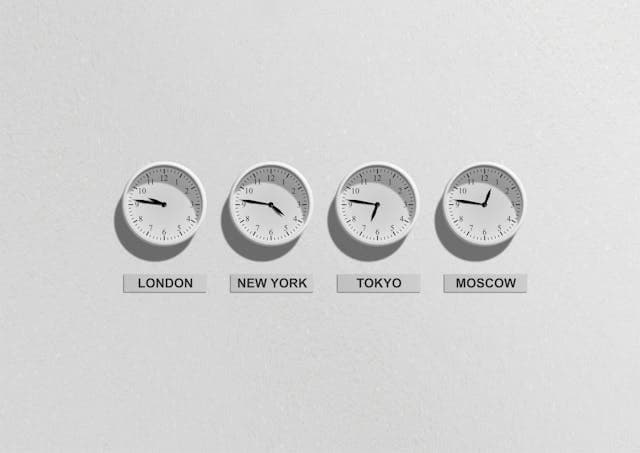
You’re in New York. It’s 10 AM on a Monday.
You need to message your remote worker in Mexico City.
So you ask yourself, what time is it there right now?
Here’s the thing: most people assume Mexico City operates exactly like the rest of North America. Same time zones, same rules.
Not quite.
Are You Looking to Hire in Latin America and Unsure Where to Start?
Sign up for an account and recruit your next employee within minutes!
Get StartedWhat Time Zone Is Mexico City On?
Mexico City runs on Central Standard Time (CST), which is UTC-6.
When it’s 9 AM in Mexico City, it’s 10 AM in New York, 9 AM in Chicago, and 7 AM in San Francisco.
Easy enough.
But here’s where people get tripped up.
Mexico Stopped Observing Daylight Saving Time
In 2022, Mexico stopped observing daylight saving time, except for a handful of border cities.
That matters.
During the months when the U.S. clocks “spring forward,” your Mexico City team member’s time doesn’t change.
For part of the year, the gap between Mexico City and certain U.S. cities shifts by an hour.
In practice, most teams adapt quickly. But it’s worth knowing before you schedule that Monday standup.
CST to U.S. Time Zones — Hour by Hour Conversion Table
Mexico City stays on CST (UTC-6) year-round.
Time difference from Mexico City (CST):
- New York / Eastern: +1 hour
- Chicago / Central: same time
- Denver / Mountain: -1 hour
- Los Angeles / Pacific: -2 hours
| Mexico City (CST) | New York (ET) | Chicago (CT) | Denver (MT) | Los Angeles (PT) |
|---|---|---|---|---|
| 12:00 AM | 1:00 AM | 12:00 AM | 11:00 PM (prev) | 10:00 PM (prev) |
| 1:00 AM | 2:00 AM | 1:00 AM | 12:00 AM | 11:00 PM (prev) |
| 2:00 AM | 3:00 AM | 2:00 AM | 1:00 AM | 12:00 AM |
| 3:00 AM | 4:00 AM | 3:00 AM | 2:00 AM | 1:00 AM |
| 4:00 AM | 5:00 AM | 4:00 AM | 3:00 AM | 2:00 AM |
| 5:00 AM | 6:00 AM | 5:00 AM | 4:00 AM | 3:00 AM |
| 6:00 AM | 7:00 AM | 6:00 AM | 5:00 AM | 4:00 AM |
| 7:00 AM | 8:00 AM | 7:00 AM | 6:00 AM | 5:00 AM |
| 8:00 AM | 9:00 AM | 8:00 AM | 7:00 AM | 6:00 AM |
| 9:00 AM | 10:00 AM | 9:00 AM | 8:00 AM | 7:00 AM |
| 10:00 AM | 11:00 AM | 10:00 AM | 9:00 AM | 8:00 AM |
| 11:00 AM | 12:00 PM | 11:00 AM | 10:00 AM | 9:00 AM |
| 12:00 PM | 1:00 PM | 12:00 PM | 11:00 AM | 10:00 AM |
| 1:00 PM | 2:00 PM | 1:00 PM | 12:00 PM | 11:00 AM |
| 2:00 PM | 3:00 PM | 2:00 PM | 1:00 PM | 12:00 PM |
| 3:00 PM | 4:00 PM | 3:00 PM | 2:00 PM | 1:00 PM |
| 4:00 PM | 5:00 PM | 4:00 PM | 3:00 PM | 2:00 PM |
| 5:00 PM | 6:00 PM | 5:00 PM | 4:00 PM | 3:00 PM |
| 6:00 PM | 7:00 PM | 6:00 PM | 5:00 PM | 4:00 PM |
| 7:00 PM | 8:00 PM | 7:00 PM | 6:00 PM | 5:00 PM |
| 8:00 PM | 9:00 PM | 8:00 PM | 7:00 PM | 6:00 PM |
| 9:00 PM | 10:00 PM | 9:00 PM | 8:00 PM | 7:00 PM |
| 10:00 PM | 11:00 PM | 10:00 PM | 9:00 PM | 8:00 PM |
| 11:00 PM | 12:00 AM (next) | 11:00 PM | 10:00 PM | 9:00 PM |
How U.S. Daylight Saving Time Affects Mexico City Scheduling
This is the part most people miss.
Mexico City doesn’t change its clocks. But U.S. cities do from mid-March to early November.
When the U.S. shifts to daylight saving time, the gap between Mexico City and the U.S. East Coast shrinks by one hour.
Mexico City and Chicago actually align for most of the year during DST. New York is only one hour ahead instead of two.
Here’s what that looks like in practice.
During U.S. Daylight Saving Time (mid-March to early November)
| Mexico City (CST) | New York (EDT) | Chicago (CDT) | Denver (MDT) | Los Angeles (PDT) |
|---|---|---|---|---|
| 12:00 AM | 2:00 AM | 1:00 AM | 12:00 AM | 11:00 PM (prev) |
| 1:00 AM | 3:00 AM | 2:00 AM | 1:00 AM | 12:00 AM |
| 2:00 AM | 4:00 AM | 3:00 AM | 2:00 AM | 1:00 AM |
| 3:00 AM | 5:00 AM | 4:00 AM | 3:00 AM | 2:00 AM |
| 4:00 AM | 6:00 AM | 5:00 AM | 4:00 AM | 3:00 AM |
| 5:00 AM | 7:00 AM | 6:00 AM | 5:00 AM | 4:00 AM |
| 6:00 AM | 8:00 AM | 7:00 AM | 6:00 AM | 5:00 AM |
| 7:00 AM | 9:00 AM | 8:00 AM | 7:00 AM | 6:00 AM |
| 8:00 AM | 10:00 AM | 9:00 AM | 8:00 AM | 7:00 AM |
| 9:00 AM | 11:00 AM | 10:00 AM | 9:00 AM | 8:00 AM |
| 10:00 AM | 12:00 PM | 11:00 AM | 10:00 AM | 9:00 AM |
| 11:00 AM | 1:00 PM | 12:00 PM | 11:00 AM | 10:00 AM |
| 12:00 PM | 2:00 PM | 1:00 PM | 12:00 PM | 11:00 AM |
| 1:00 PM | 3:00 PM | 2:00 PM | 1:00 PM | 12:00 PM |
| 2:00 PM | 4:00 PM | 3:00 PM | 2:00 PM | 1:00 PM |
| 3:00 PM | 5:00 PM | 4:00 PM | 3:00 PM | 2:00 PM |
| 4:00 PM | 6:00 PM | 5:00 PM | 4:00 PM | 3:00 PM |
| 5:00 PM | 7:00 PM | 6:00 PM | 5:00 PM | 4:00 PM |
| 6:00 PM | 8:00 PM | 7:00 PM | 6:00 PM | 5:00 PM |
| 7:00 PM | 9:00 PM | 8:00 PM | 7:00 PM | 6:00 PM |
| 8:00 PM | 10:00 PM | 9:00 PM | 8:00 PM | 7:00 PM |
| 9:00 PM | 11:00 PM | 10:00 PM | 9:00 PM | 8:00 PM |
| 10:00 PM | 12:00 AM (next) | 11:00 PM | 10:00 PM | 9:00 PM |
| 11:00 PM | 1:00 AM (next) | 12:00 AM (next) | 11:00 PM | 10:00 PM |
During DST season, Chicago and Mexico City are on the same clock. That’s about eight months of the year where your Central U.S. team and your Mexico City team are perfectly synced.
When Meetings Actually Work
With East Coast teams, scheduling is almost effortless.
- 9 AM New York (standard) = 8 AM Mexico City
- 9 AM New York (DST) = 7 AM Mexico City — a bit early, worth checking
With West Coast teams, you have more room.
- 9 AM San Francisco = 11 AM Mexico City — that works well
- 7 AM Los Angeles standup = 9 AM Mexico City — doable, but consider morning responsibilities like getting kids to school
The 4 PM advantage is real too. A last-minute 4 PM Eastern meeting is 3 PM in Mexico City. Still a normal workday. Compare that to São Paulo where that same call lands at 6 PM or later.
How Mexico City Compares to Other Latin American Cities
Not all of Latin America is the same time zone. This trips up a lot of hiring managers.
Mexico is in North America, not South America. And the time zone gaps across the region are significant.
| City | Time Zone | Offset vs. Mexico City (CST) |
|---|---|---|
| Mexico City | CST (UTC-6) | — |
| Bogotá, Colombia | UTC-5 | +1 hour ahead |
| Buenos Aires, Argentina | UTC-3 | +3 hours ahead |
| Santiago, Chile | UTC-3 to UTC-4 (seasonal) | +2 to +3 hours ahead |
| São Paulo, Brazil | UTC-3 | +3 hours ahead |
Mexico City’s UTC-6 puts it in the sweet spot for U.S. companies — especially if your team spans multiple U.S. time zones.
The Bottom Line
Mexico City runs on Central Time and stays there year-round. The U.S. shifts around it twice a year, which changes the gap slightly, but the overlap with U.S. business hours is consistent and real.
More than the time zones, you’re working with educated professionals who communicate in English, collaborate in real time, and gain something meaningful from working remotely.
The time zone makes logistics easy. The rest is about building a team that actually works.
HireTalent.LAT connects you with remote workers across Mexico and Latin America search verified profiles, post jobs, and manage your team from one platform.