A talented developer in Colombia opens your job post. She’s got 6 years of experience. She’s worked with US companies before. Her English is great.
She sees: “Looking for a rockstar developer! Flexible hours! Competitive pay!”
And she closes the tab.
Why?
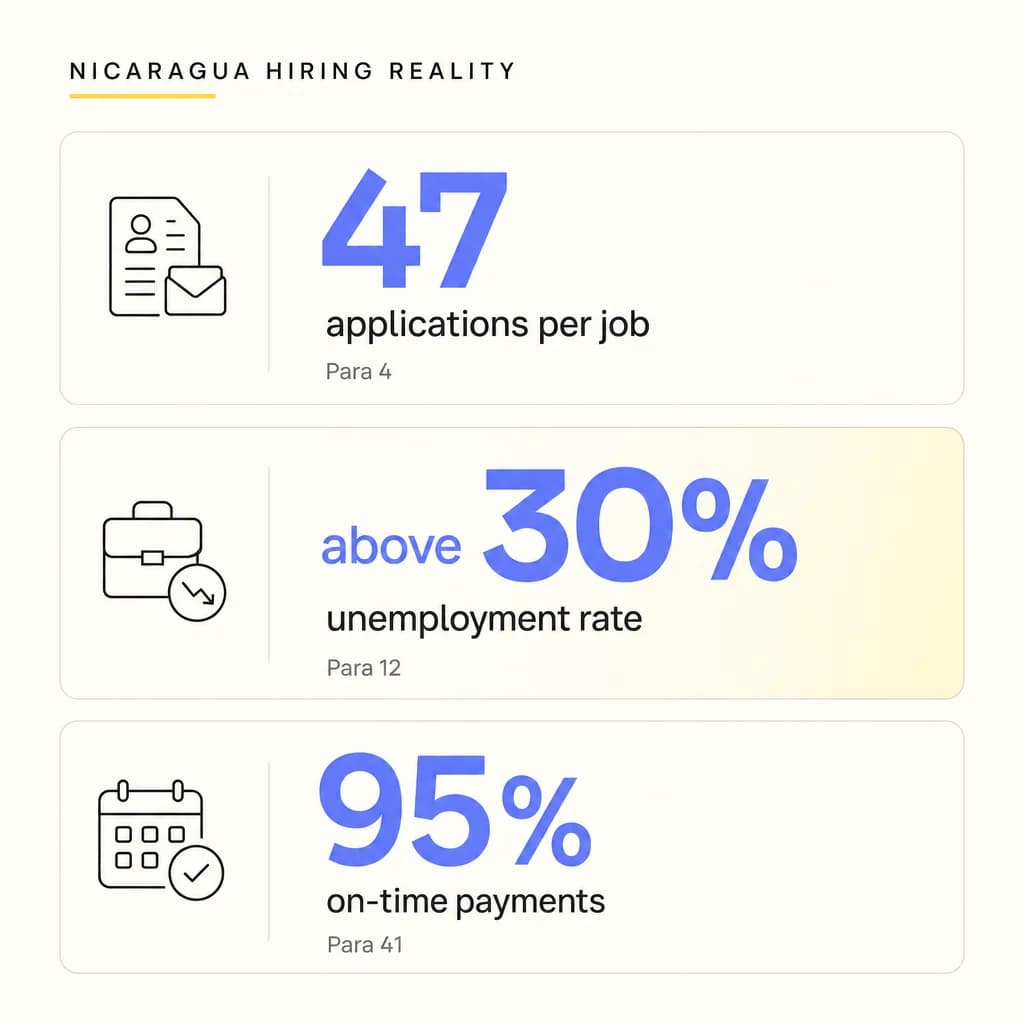
Because she’s seen that exact wording on 47 scam posts this month.
Posts that turned out to be $3/hour gigs. Or “trials” that never paid. Or companies that disappeared after two weeks.
Your job post isn’t competing with other legitimate companies.
It’s competing with a minefield of exploitative offers that have trained Latin American professionals to be suspicious.
Are You Looking to Hire in Latin America and Unsure Where to Start?
Sign up for an account and recruit your next employee within minutes!
Get StartedWhat serious candidates actually want to see
Let me tell you what makes people in Latin America excited about a job post.
Long-term stability. Not “3-month contract with possibility of extension.” Say “ongoing remote position” or “permanent contractor role.”
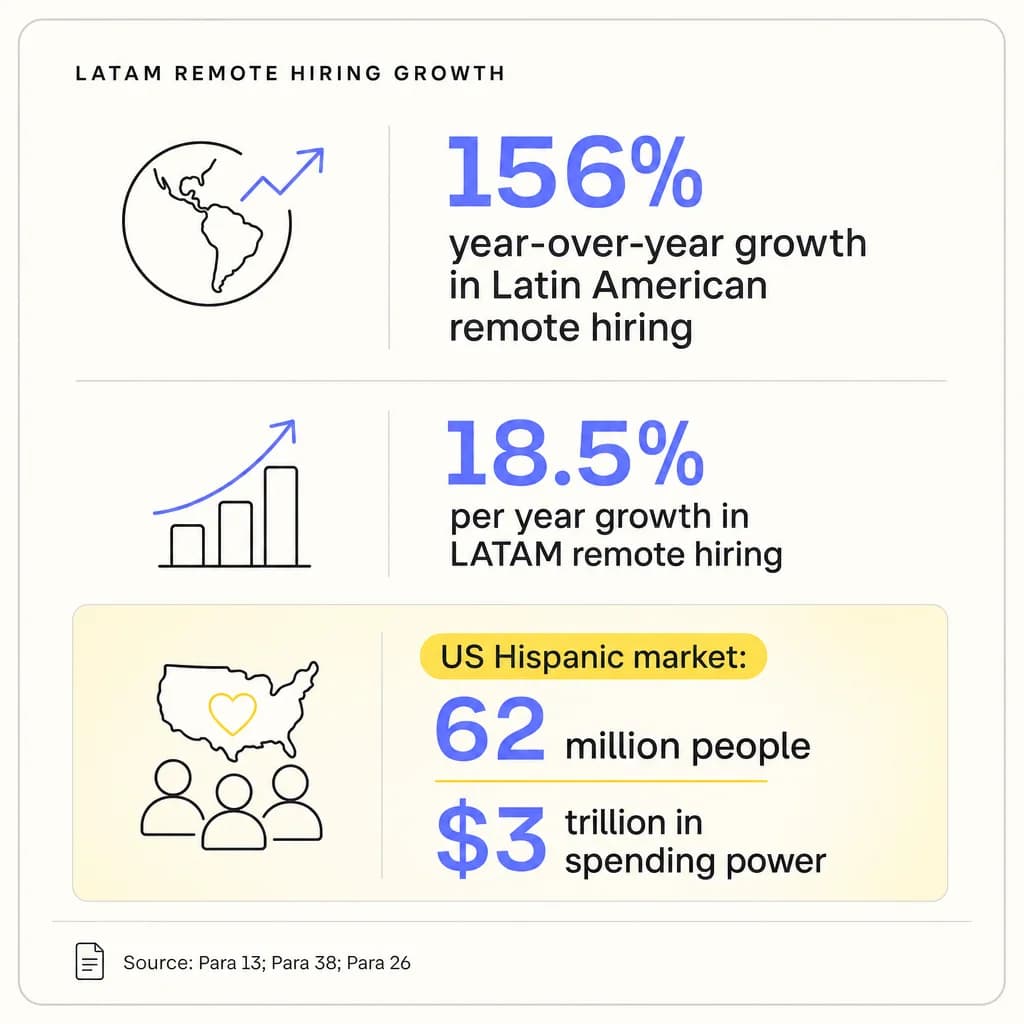
Talented people in Latin America aren’t looking for side hustles. They’re looking for careers. They want to wake up tomorrow knowing they still have a job.
Transparent pay. List an actual range. In USD. Not “competitive salary” or “depends on experience.”
After you’ve been burned by three “surprise” pay cuts, you learn to run from vague compensation sections.
Respected time zones. Say something like “Core hours 9am-1pm US Eastern (10am-2pm Colombia time)” instead of “Must be available 24/7.”
Most people in Latin America actually want US time zone alignment. But they don’t want midnight shifts. And they definitely don’t want jobs that pretend to be “flexible” but actually mean constant availability.
Room to grow. Mention something about learning, mentorship, or advancement. Even just one sentence.
The worst part of underpaid platform gigs isn’t the money. It’s feeling stuck. Show people there’s a path forward and you’ll get applications from people who plan to stay.
Write job titles that build trust
Your job title is the first test of whether you’re legit.
Here’s what works: “Senior React Developer, Fully Remote, Latin America Only”
Here’s what doesn’t: “Looking for a ROCKSTAR React Ninja!! 🚀”
To someone in Buenos Aires applying to 10 jobs a day, that title screams “this is a commission-only MLM scheme disguised as a tech job.”
The pattern that builds trust:
Role + Seniority + “Fully Remote” + Geographic specificity
“Bilingual Customer Support Specialist (US EST Hours), LATAM Applicants Welcome”
“Mid-Level Content Writer, Remote, Latin America Direct Hire”
Notice “Direct hire.” These aren’t just keywords. They’re signals that tell candidates you’re hiring them directly, not through some sketchy middleman agency taking 40% of their pay.
Spell out “Latin America” or use “LATAM.” If you can list countries, even better.
“Open to candidates in: Mexico, Colombia, Argentina, Brazil, Chile, Peru”
Takes two seconds to write. Instantly filters out confusion.
Spell out the critical details
You know what kills applications?
Making people guess.
Location and time zone specifics. Don’t just say “Latin America.” Say which countries you can actually work with.
And be specific about hours: “Core collaboration hours: 9am-1pm US Eastern (that’s 10am-2pm in Argentina, 8am-12pm in Mexico City).”
You’re doing the math for them. You’re showing you’ve thought about their time zone.
Contract structure. Are they independent contractors? Are you using an Employer of Record?
Just say it.
“This is an independent contractor position (1099-equivalent for US tax purposes). You’ll invoice us monthly and we’ll pay via Wise.”
Or: “We use an Employer of Record for compliant local employment contracts in your country.”
Real compensation numbers. A range. In USD.
“$2,000-$3,500/month USD depending on experience”
Or if you’re doing hourly: “$15-$25/hour USD”
Also mention any benefits you can offer. Even for contractors:
- Paid time off
- Health stipend
- Learning budget
- Annual bonus
English requirements. Be specific.
“B2+ written and spoken English. Daily team meetings in English. You’ll be writing client-facing documentation.”
Not “must speak perfect English” (which scares off great candidates whose English is actually fine).
If you need someone who can hop on client calls, say it. If written English is more important than spoken, say that too.
Tools and work style. List the actual tools.
“We use Slack for daily communication, Notion for documentation, and have a weekly 1-hour team video call on Zoom.”
Also clarify your async vs sync culture.
“We’re heavily asynchronous. Most communication happens in writing. We don’t expect instant responses.”
Or: “We have daily 30-minute standups and pair programming sessions twice a week.”
Both are fine. Just be honest about it.
Focus on outcomes, not credentials
Here’s where a lot of US companies accidentally filter out their best candidates.
They copy-paste requirements from their domestic job posts.
“5+ years at a US SaaS company” “Bachelor’s degree from an accredited university”
Plenty of senior engineers in Latin America don’t have those credentials. Not because they’re not qualified.
Because the local job market works differently.
So focus on outcomes instead.
Instead of “5 years at a US company,” say: “Proven track record shipping production React applications. Link to your GitHub or live projects.”
Instead of “Bachelor’s degree required,” say: “Strong foundation in computer science fundamentals. We care about what you can build, not where you studied.”
The tone that matters
The way you write your job post is the first glimpse of your company culture.
Don’t write: “We hire in Latin America to reduce costs while maintaining quality!”
Because here’s how that reads to someone in Medellín: “We see you as the cheap option.”
Instead: “We value Latin American talent for time-zone alignment, strong technical skills, and long-term collaboration.”
Address feedback directly: “We do biweekly 1-on-1s. You’ll always know where you stand. If something isn’t working, we’ll tell you clearly and give you time to adjust.”
And if English is a requirement: “Your accent is fine. Clarity matters more than perfection. We’re a global team and we all sound different.”
A structure that converts
Start with a hook. Two or three sentences about your company and why Latin America specifically.
“We’re a 15-person product team building fintech tools for small businesses. We’ve been working with developers in Colombia and Argentina for three years and we’re expanding. We value time-zone alignment and long-term partnerships.”
One paragraph role summary. What’s the impact?
“You’ll own our customer onboarding flow from end to end. This means designing new user experiences, writing React components, and working directly with our founders to shape product direction.”
List 3-5 core responsibilities. Focus on outcomes.
Not “Attend daily standup meetings.”
Instead: “Ship new features weekly based on customer feedback.”
Split requirements into must-have and nice-to-have.
Must-have:
- 3+ years React experience with shipped products
- Strong written English (you’ll be writing technical docs)
- Available 9am-1pm US Eastern for core team hours
- Comfortable with async communication
Nice-to-have:
- Experience with TypeScript and Next.js
- Previous fintech or SaaS experience
- Familiarity with Figma
Compensation and contract details. All in one section.
“This is a long-term independent contractor position. $3,000-$4,500/month USD paid via Wise, depending on experience. Core hours are 9am-1pm US Eastern (10am-2pm Argentina, 11am-3pm Brazil, 8am-12pm Mexico). We also provide a $500/year learning budget and 15 paid days off.”
Tools and culture.
“We use Slack for daily communication, Notion for documentation, Linear for project tracking, and GitHub for code. We’re about 70% asynchronous. We have one weekly video call and occasional pair programming sessions. We document everything and don’t expect instant responses.”
Application instructions.
“Send us:
- Your CV or LinkedIn
- A 2-minute video or portfolio showing something you’ve built
- One sentence about what interests you about this role
We respond to every applicant within 5 business days.”
That last line matters. People are so used to being ghosted.
What changes when you do this right
You don’t get 300 random applications.
You get 40 really good ones.
From people who read every word. Who actually want this specific job.
And the people you hire? They stick around.
Because they knew exactly what they were signing up for. No surprises. No bait-and-switch.
Just honest work with fair pay and mutual respect.