You’re scrolling through applications from Latin America.
Great candidates. Strong portfolios. Good English.
Then you see the work history.
Six jobs in four years. Three roles that lasted less than a year. A mix of “contractor” and “employee” positions that don’t quite add up.
Your gut says red flag.
But here’s what most employers miss: frequent job changes mean something completely different in Latin America than they do in the US or UK.
Understanding that difference is how you find incredible talent everyone else passes over.
Why Latin American CVs Look Different
Before you write off a candidate with five job changes, you need context.
The employment landscape in Latin America works differently than what you’re used to.
Inflation drives job moves
In Argentina, annual inflation hit triple digits recently. In Venezuela, it’s been catastrophic for years. Even stable countries like Mexico and Colombia see 4-8% inflation annually.
When your salary loses 10-30% of its purchasing power every year, you move jobs. Not because you’re flaky. Because you need to eat.
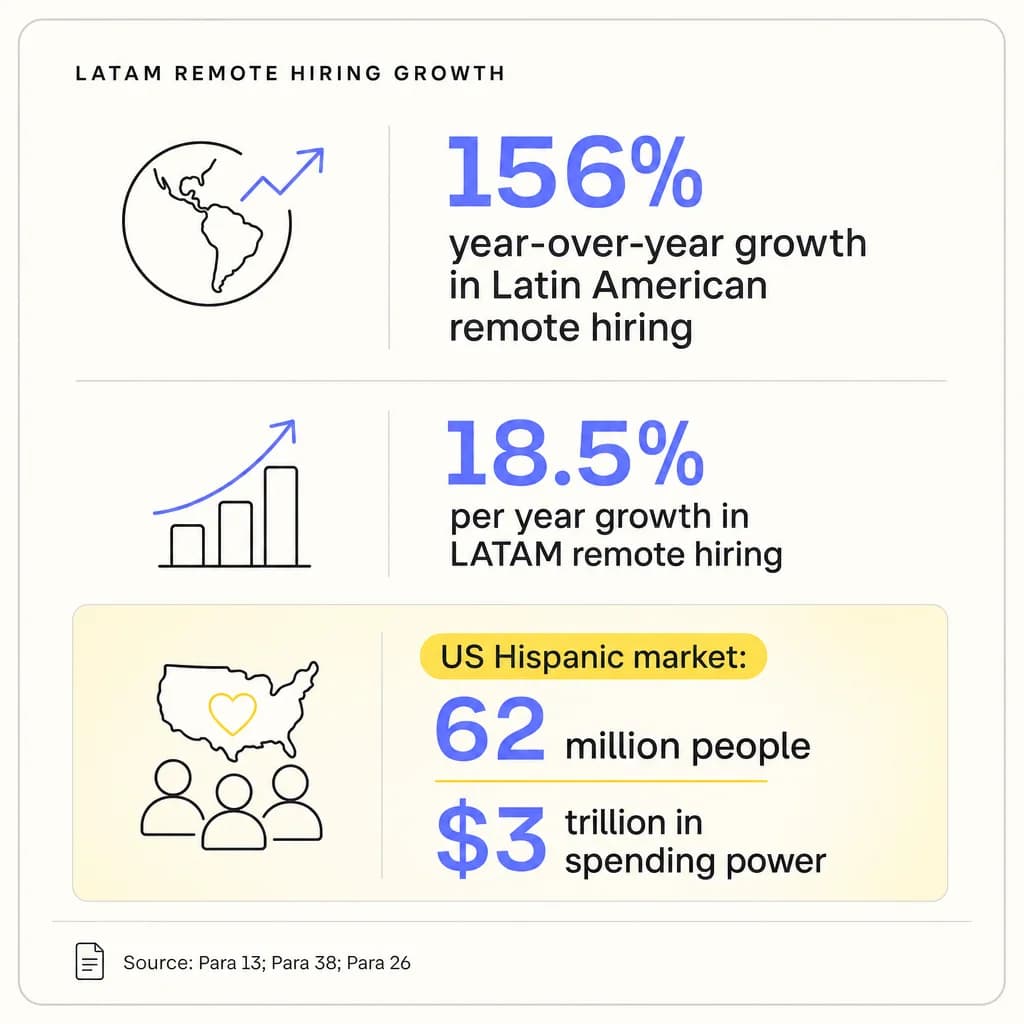
Many professionals chase dollar-denominated remote work specifically to escape currency devaluation. That creates frequent moves as they transition from local to international work.
Contract work is the norm, not the exception
Outsourcing firms, BPOs, and staffing agencies dominate tech and professional services across Latin America.
A talented developer in São Paulo might work for three different end clients through the same agency over two years.
Their CV shows three “jobs.” The reality? They had stable agency employment the whole time.
Project-based contracts of 6-12 months are standard in marketing, design, development, and customer support. These aren’t job hops. They’re how the market works.
When Job Changes Are Actually Red Flags
Not all movement is created equal.
Some patterns genuinely signal problems.
Four or more roles under 12 months each
If every recent position lasted less than a year and there’s no clear reason why, dig deeper.
One short stint happens. Two can make sense. Four in a row? That’s a pattern worth understanding.
No progression in scope or responsibility
Moving from Junior Developer to Senior Developer to Tech Lead shows growth.
Moving between three “Social Media Manager” roles at similar-sized companies with no increase in team size, budget, or complexity? That’s lateral spinning.
Vague reasons for leaving every time
“Bad culture” at one company is reasonable. “Toxic boss” at five companies suggests the person might be the common denominator.
Good candidates explain moves with specifics. They learned what they needed to. The project ended. They wanted exposure to different tech. The company restructured.
Bad candidates blame everyone but themselves.
No completed projects or measurable impact
If they left before shipping anything meaningful at multiple jobs, that’s concerning.
You want to see: launched products, finished campaigns, systems that still run, clients who stuck around.
Not: started things, worked on stuff, contributed to teams.
Contractor relationships that look like employment
This is the big legal risk.
If their CV shows “contractor” but they worked 40 hours per week for one client for 18 months using that client’s tools and following that client’s schedule, that’s misclassification waiting to blow up.
In Brazil and Mexico especially, labor courts will retroactively classify those relationships as employment and hit the company with back taxes, benefits, and penalties exceeding $100,000 per worker.
When Job Changes Signal Great Talent
Here’s the truth most employers don’t get: the best remote workers often have the most job changes.
Because they have options.
Clear upward trajectory
Each move increased responsibility, pay, or technical complexity.
Junior to mid-level to senior. Small clients to enterprise accounts. Simple projects to multi-system integrations.
That’s not instability. That’s ambition.
One or two anchor roles of 2+ years
Even candidates who move frequently usually have a couple longer stints.
Those anchor roles prove they can commit when the fit is right. The shorter moves just mean they know what they want and won’t settle.
Project-based logic that makes sense
Freelance and contract CVs should show 3-12 month engagements with clear deliverables.
“Built checkout flow for e-commerce client (4 months)” is different than “worked at random startup (4 months, left because reasons).”
The first is professional project work. The second is a job hop.
Strong references from past clients or managers
If someone moves jobs every 18 months but their former managers will vouch for them, the moves aren’t the issue.
References matter more than tenure for remote roles.
How to Actually Evaluate These Candidates
Stop guessing. Use a framework.
Map out the full employment story
Have them walk you through the last five years month by month.
Ask them to tag each role as: direct employee, agency placement, freelance project, internship, or part-time gig.
You’ll immediately see if what looks like chaos is actually organized freelancing or legitimate career growth through multiple experiences.
Look for anchor roles where they stayed 24+ months or took a project through multiple phases: build, launch, iteration, optimization.
Those prove they can stick around when it matters.
Ask specific questions about each move
Don’t accept generic answers.
Try these:
“What were you hired to do, and how did that role change over time?”
“What specific trigger made you start looking for something new?”
“If you could go back to that job, what would you handle differently?”
“What would make you want to stay with a company for 3-5 years right now?”
For Latin American candidates specifically, add:
“How did currency stability or inflation factor into your decision to move?”
“Were you hired directly by the client or through an agency or EOR?”
Good candidates give concrete, honest answers without trashing past employers. They acknowledge what they learned and what they’d do differently.
Bad candidates blame external factors every time and take zero responsibility.
Test their remote work reliability
Job tenure doesn’t predict remote performance.
What does? Proof they can deliver without supervision.
Ask: “Describe your typical workday when you’re fully remote.”
Ask: “Tell me about a time you handled a critical issue across time zones with async communication.”
Look for at least one sustained remote experience of 12+ months where they shipped work independently.
Then run a paid trial task. Two weeks, part-time, with clear deliverables.
You’ll learn more in those two weeks than in any interview.
Assess whether they’ll actually stay
Job hoppers exist in every market.
Figure out if you’re hiring one.
“What does your ideal next 2-3 years look like?”
“How do you typically evaluate whether an employer is a good fit?”
“What makes you stay at a company long-term versus looking for something new?”
Discuss compensation expectations and review cycles explicitly. Many Latin American candidates move to protect their income from inflation. Clear salary growth paths reduce that pressure.
If someone tells you they want 12-18 month stints to keep learning, believe them. They might be perfect as a contractor but wrong for a key long-term hire.
Cultural Considerations That Matter
Latin American work culture has different expectations than US or UK culture.
Understanding those differences helps you evaluate candidates fairly.
Direct US-style feedback can land as harsh or rude in many Latin American contexts.
People may soften disagreement, avoid blunt “no,” and prefer indirect conflict resolution.
The “get it done” mentality is real
Many Latin American professionals describe their work environments as chaotic but highly improvisational.
“We’ll figure it out and get the job done no matter what” is a common attitude.
This can be incredible for startups and fast-moving teams.
For Candidates: How to Present Your CV
If you’re reading this as a remote worker with frequent job changes, here’s how to make your CV work for you instead of against you.
Group freelance work into one section
Don’t list every 3-month project separately.
Create one “Freelance [Your Role]” section with bullet points showing major clients and outcomes.
Show outcomes, not just durations
Metrics matter more than months.
“Increased conversion rate 34% through landing page optimization” beats “worked on marketing team for 6 months.”
Have a clear, honest explanation ready
Don’t trash past employers.
Focus on growth, project cycles, and economic realities.
“I moved to dollar-denominated remote work to protect my income from currency devaluation” is honest and smart.
Highlight anchor engagements
Even if you were paid through an agency, you can describe long-running client work as a single multi-year experience with clear milestones.
Clarify your legal status
Note when you were a contractor versus employee.
This helps foreign employers structure the relationship properly and avoid misclassification risk.
The Bottom Line
Frequent job changes on a Latin American CV aren’t automatically bad.
They’re often signs of:
Economic pressure driving smart career moves. Project-based work becoming mainstream. Ambitious professionals with options choosing growth over stability.
Your job is to distinguish strategic moves from genuine instability.
Use the framework above. Ask specific questions. Run paid trials. Check references.
And remember: the candidate who stayed at one mediocre job for five years might be a bigger risk than the one who moved four times to level up their skills and income.
The best remote talent doesn’t always have the cleanest CV.
Sometimes they just have the most interesting story.